
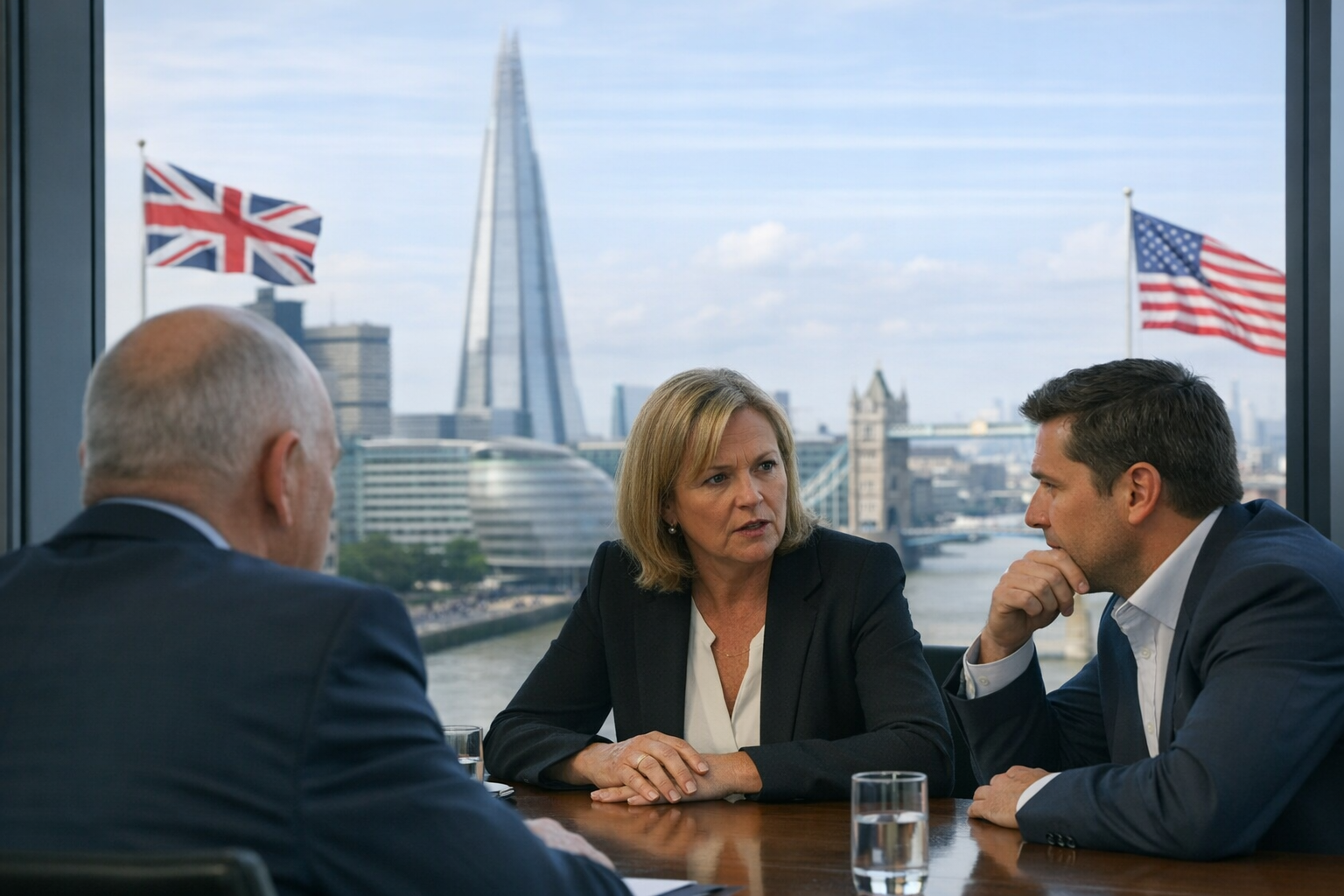
The UK Government has drawn a red line: Greenland’s future is for its people and the Kingdom of Denmark. On Sunday 18 January, Culture Secretary Lisa Nandy told the BBC that President Trump’s tariff threats against the UK and seven European allies were “deeply unhelpful”, but she stressed the UK would not compromise. For company directors, this is no longer a remote diplomatic spat; it is a live trade risk with a deadline attached: Thursday 1 February.
The White House says a US takeover of Greenland is a national security imperative. Officials have floated a purchase and, while force has not been ruled out, they maintain diplomacy comes first. In response, Denmark, Finland, France, Germany, the Netherlands, Norway, Sweden and the UK issued a joint statement pledging full solidarity with Copenhagen and the people of Greenland, vowing a united and coordinated response. Their joint text warned the threatened levies undermine transatlantic relations and risk a dangerous downward spiral.
Tariffs are the pressure point. The plan would impose a 10% duty on imports from the eight countries from 1 February, with scope to rise to 25% until a deal is struck. Tariffs are paid by the importer to the US government, not the exporting country, but UK exporters will feel the impact through cancelled orders, price‑cut demands and squeezed margins.
Prime Minister Sir Keir Starmer called the move “completely wrong” and said he would raise it directly with Washington. Nandy noted the President often opens with a firm stance before encouraging dialogue, yet underlined that self‑determination for Greenland is non‑negotiable. As of Sunday, Starmer had not yet spoken to the President since the plan was trailed on Saturday but aims to do so at the earliest opportunity, Nandy said. The UK has previously avoided or minimised earlier US tariffs, and Starmer has served as a bridge in transatlantic diplomacy over Ukraine; on Greenland, however, ministers are firmly with Denmark.
US House Speaker Mike Johnson told the BBC he accepts Greenland is “not our land” and said he does not foresee military intervention, pointing to diplomatic channels. BBC reporting also notes that the administration’s posture has hardened since early January, while Mr Trump argues Denmark lacks capacity to shield the island from Russia and China. Greenland’s leaders have said they prefer to remain Danish, and Copenhagen has warned any attack on its territory would end NATO. The US already has more than 100 personnel at its missile‑monitoring station on Greenland under agreements that allow further deployments.
Criticism spans parties in Westminster. Shadow foreign secretary Dame Priti Patel called the tariff threat “completely wrong” and counterproductive for families and businesses on both sides of the Atlantic. Conservative MP Sir Jeremy Hunt warned that invading a NATO ally would spell the end of the alliance and leave America weaker. Reform UK’s Richard Tice said protecting the Arctic is the right objective pursued the wrong way. Liberal Democrat leader Sir Ed Davey said the UK is being punished for doing the right thing, and the Green Party’s Ellie Chowns branded the decision unhinged.
Directors should interpret the next fortnight as a pricing and cashflow stress test, not a media cycle. If you sell into the US on Delivered Duty Paid terms, you or your logistics partner will remit the tariff at the border. If your American customer is the importer of record, expect pressure to split the bill or rebase 2026 price lists. In either case, economic reality assigns part of the cost to you unless you move quickly.
Exposure is highest in consumer goods, industrial components, aerospace and automotive supply chains, and food and drink. These are low‑margin, high‑volume lanes where a 10% duty can erase profits overnight; at 25%, some product lines become unviable without rapid re‑pricing, SKU rationalisation or temporary suspension. Dollar‑denominated inputs compound the squeeze for firms without currency hedging.
Action now beats regret later. Bring forward February shipments where possible, confirm customs classification (HS/HTS codes) to avoid overpayment or fines, and revisit Incoterms-these allocate costs and risks-so responsibility for duties is explicit. Speak to US distributors about pass‑through surcharges and credit limits; clarify how rebates, marketing support and returns are treated when tariffs apply. If a cash squeeze is likely, protect working capital: slow non‑essential capital expenditure, open discussions with lenders, and explore HMRC Time to Pay rather than drifting into crisis.
Meanwhile, allied governments are tightening coordination. A Danish‑led reconnaissance mission to Greenland involving the UK, Germany, Sweden, Norway, Finland, France and the Netherlands drew a sharp response from Washington, which accused them of playing a “dangerous game”. The eight capitals insist the exercise strengthens Arctic security and poses no threat. Until the tariff threat is pulled formally, directors should plan for enforcement on Thursday 1 February and act accordingly.